Defamation in India: What You Should Know Before Posting Online
A practical legal guide to understanding how a single post, review, or forwarded message can expose you to serious civil and criminal liability — and what to do if you become a victim.
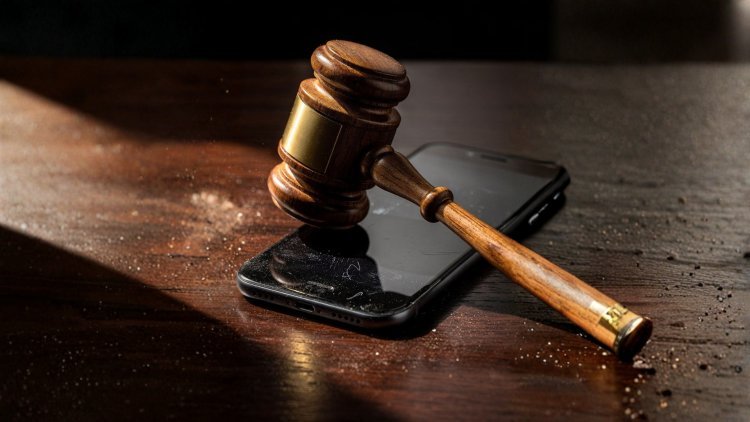
CYBER LAW INDIA
Understanding Online Defamation in India
Defamation law in India applies strongly to online content. A single false statement published on digital platforms can trigger civil and criminal liability under Indian law. Understanding the structure of this law is essential before posting or sharing content online.
DEFINITION
What Is Defamation?
Defamation is a false statement of fact that harms a person’s reputation when communicated to a third party.
In the digital context, it includes posts, comments, reviews, messages, or any online publication that presents false information as fact rather than opinion.
The key legal test is whether the statement can reasonably be interpreted as factual and damaging.
LEGAL FRAMEWORK
Governing Laws in India
Defamation is governed primarily by Sections 499 and 500 of the Bharatiya Nyaya Sanhita (formerly IPC).
The Information Technology Act also plays a supporting role in addressing online publication and intermediary liability.
Courts additionally consider IT Rules 2021 for platform responsibility and content moderation obligations.
PROOF REQUIREMENT
What Must Be Proven
To establish defamation, the statement must be shown to be false, published to a third party, and identifiable to the claimant.
It must also demonstrate reputational harm or a likelihood of harm.
In criminal cases, intent or negligence strengthens liability, while civil cases focus on reputational damage itself.
LEGAL CONSEQUENCE
Civil & Criminal Liability
Defamation in India can lead to both monetary compensation claims and criminal prosecution.
Criminal penalties may include imprisonment up to two years, a fine, or both depending on severity.
This dual structure makes India’s defamation framework one of the strictest globally for online speech.
Online defamation law in India applies even to everyday digital communication. Whether on social media, messaging apps, or review platforms, false statements that harm reputation can trigger serious legal consequences under both civil and criminal law frameworks.
LEGAL INSIGHT FRAMEWORK
Forms of Online Defamation
Defamation online appears across multiple digital channels. Courts treat every format as published communication under law.
Social Media Posts
False statements on platforms like X, Facebook, Instagram, LinkedIn, or YouTube are treated as published content instantly and can spread rapidly.
Public Reviews & Ratings
Fake or malicious reviews on platforms like Google, Amazon, or Glassdoor may qualify as defamation when factual claims are false or misleading.
WhatsApp Forwarded Messages
Forwarding defamatory content is treated as republication under Indian law. Even resharing in groups creates legal liability.
Retweets & Reposts
Retweeting or reposting defamatory content can create independent liability, especially for influential or public accounts.
LEGAL FRAMEWORK · INDIA
Civil vs Criminal Defamation
Indian defamation law operates on two parallel legal tracks — civil compensation and criminal punishment — often triggered by the same online act.
Civil Defamation
Focuses on compensation rather than punishment. Courts award damages for reputational harm, business loss, or emotional distress.
Key point: No imprisonment — only monetary liability and injunctions.
Criminal Defamation
Punishable under Bharatiya Nyaya Sanhita, 2023 with imprisonment up to 2 years or fine or both.
Key point: Requires complaint before Magistrate — no FIR needed.
Key Legal Standards
Civil cases use "preponderance of probability", while criminal cases require proof "beyond reasonable doubt".
Key point: Burden of proof is significantly higher in criminal defamation.
Parallel Liability
A single post can trigger both civil and criminal proceedings simultaneously in India.
Key point: Courts may award damages while criminal prosecution proceeds in parallel.
DIGITAL DEFAMATION · PROCEDURE GUIDE
Suing & Platform Liability
Modern Indian courts provide structured remedies against anonymous defamers and online platforms through evolving procedural frameworks.
John Doe Suit (Anonymous Defamers)
Allows filing against unknown online offenders. Courts can order platforms to disclose identity via IP, email, or account data.
Key point: Defendant is added once identity is revealed through court order.
Intermediary Liability Rule (2026)
Platforms cannot be forced to remove content without judicial declaration of illegality.
Key point: Safe harbor protection under IT Rules, 2021 remains unless due process is followed.
Filing Without Postal Address
Courts accept digital identifiers like IP addresses, emails, and handles when physical address is unavailable.
Key point: Cyber complaints cannot be rejected solely for lack of postal address.
Where to File Your Case
Options include Civil Courts, Magistrate Courts, Cybercrime Portal, and platform grievance systems.
Key point: Strategy depends on urgency, evidence strength, and remedy desired.
DIGITAL DEFAMATION · EVIDENCE PROTECTION
Preserving Evidence: Your Digital Footprint Matters
Digital evidence is fragile and time-sensitive. Proper preservation determines whether your legal claim stands or collapses.
CRITICAL RULE
Never delete, edit, or alter digital content. Courts prioritize original, timestamped, and unmodified records as primary evidence.
Take Full Context Screenshots
Capture username, timestamp, engagement metrics, and full content. Avoid cropping or edits. Preserve visibility of date/time bar on mobile screenshots.
Archive URLs Immediately
Save permalinks and create third-party archives using Wayback Machine or archive tools to lock in evidence before deletion.
Maintain Witness Records
Record individuals who viewed the content. In group chats, member lists establish publication and strengthen legal credibility.
PROFESSIONAL ACTION
Consult Digital Forensics
Experts can extract metadata, recover deleted posts, and verify authenticity using court-admissible methods.
QUICK CHECKLIST
✔ Screenshots with timestamps
✔ Archived URLs saved
✔ Witness list recorded
✔ Platform metrics captured
✔ Legal notice prepared
✔ Proof of harm documented