Road Safety & Compliance: The True Cost of Neglect
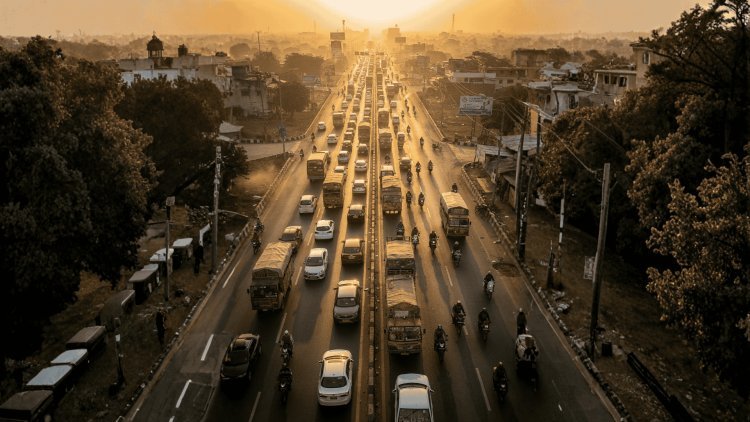
India's roads are among the most dynamic — and most dangerous — in the world. Every year, millions of traffic violations go unaddressed, creating a growing crisis of unpaid challans, suspended licences, and preventable accidents. This presentation explores the landscape of common traffic offences, how the modern e-challan system works, and why staying compliant isn't just a legal obligation — it's a matter of
personal safety and civic responsibility.
Traffic Law Enforcement Guide
The Reality of Traffic Offences
India's traffic enforcement landscape has undergone a dramatic transformation in the past decade. With AI-powered surveillance cameras, automated number-plate recognition (ANPR), and widespread deployment of breathalysers at checkpoints, getting away with a violation has become increasingly difficult. Understanding the most common offences — and their legal consequences — is the first step toward responsible driving.
SPEED
Highway Enforcement Risk
Overspeeding
01
Frequently Recorded Violation
One of the most frequently recorded violations across national and state highways.
Penalty under the amended Motor Vehicles Act, 2019 can reach ₹1,000–₹2,000 for the first offence and up to ₹5,000 for repeat violations.
Overspeeding is a leading cause of fatal road accidents in India, particularly on expressways where speed limits are routinely ignored.
Enforcement Reality
Speed cameras and ANPR systems now make highway violations easier to detect and document.
02
SIGNAL
Automated Intersection Enforcement
Red-Light Jumping
Running a red signal is both a safety hazard and a heavily penalised offence.
Modern intersections in cities like Delhi, Mumbai, and Bengaluru are equipped with automated cameras that capture violations and trigger an e-challan instantly — without the need for a physical officer to be present.
Fines start at ₹1,000 and can escalate with repeated violations.
04
LIST
Everyday Penalty Triggers
Other Common Violations
Additional frequently penalised offences include not wearing a seatbelt, using a mobile phone while driving, riding without a helmet, driving without a valid licence, and overloading vehicles.
The 2019 MV Act significantly increased penalties across the board to create a stronger deterrent effect.
No Helmet
₹1,000 + possible 3-month licence suspension
DUI
Criminal Offence Risk
Drunk Driving
03
Section 185 of the Motor Vehicles Act
Defined under Section 185 of the Motor Vehicles Act, drunk driving is a criminal offence when Blood Alcohol Concentration (BAC) exceeds 30mg per 100ml of blood.
A first offence carries a fine of up to ₹10,000 and/or 6 months' imprisonment.
Repeat offenders within 3 years face fines up to ₹15,000 and/or 2 years' imprisonment.
Breathalyser screening is now routine at late-night checkpoints across all major cities.
30mg
BAC threshold per 100ml blood.
₹10K
First offence fine exposure.
2 Yrs
Repeat offence imprisonment exposure.
LAW
Serious Offence Warning
Drunk Driving Is a Criminal Offence
Drunk driving is not just a traffic violation — it is a criminal offence that can result in arrest, imprisonment, and permanent licence disqualification for repeat offenders.
E-Challan Risk Management
Why Ignoring Challans is a Risky Gamble
Digital Traffic Compliance Guide
E-Challan Verification: Take Control
The introduction of the Parivahan e-Challan portal, echallan.parivahan.gov.in, has brought unprecedented transparency to India's traffic enforcement system. Citizens no longer need to wait for a physical notice in the mail or discover a violation only when attempting to renew their vehicle documents. The digital infrastructure allows real-time tracking of all pending challans linked to a vehicle or driving licence — anytime, from anywhere.
01
Detect
Violation captured by camera or traffic officer.
02
Verify
Check status on Parivahan using RC, DL, or challan number.
03
Resolve
Pay online or contest at RTO within 45 days.
CHECK
Step-by-Step Verification
How to Check Your Challan Status
01
1
Visit the official Parivahan e-Challan portal at echallan.parivahan.gov.in.
2
Select "Check Challan Status" from the main navigation.
3
Enter your Vehicle Registration Number, Driving Licence Number, or Challan Number.
4
Enter the vehicle's chassis number or captcha as prompted.
5
View all pending, disposed, and under-process challans associated with your details.
6
Choose to pay online via UPI, net banking, or debit/credit card, or visit the nearest RTO if you wish to contest the challan.
LIVE
Database Visibility
Real-Time Updates
Challans issued by enforcement cameras or traffic police are updated to the national database within hours. There is no grace period for ignorance — the challan exists in the system the moment it is issued.
SMS
ALERT
Notification Layer
SMS Notifications
Registered mobile numbers linked to the vehicle or licence receive automated SMS alerts when a new challan is generated, prompting timely action.
COURT
Escalation Pathway
Court Integration
Unresolved challans are periodically forwarded to virtual courts, where fines may increase and a formal summons can be generated — adding legal complexity to what started as a simple traffic fine.
45
Payment Window
45-Day Payment Window
45
Resolve or Dispute Promptly
Authorities generally expect challans to be settled or formally disputed within 45 days of issuance.
Failure to act within this window triggers escalation procedures including service blocks on the SARTHI and VAHAN national databases.
Pay Online
Use UPI, net banking, debit card, or credit card.
Contest Formally
Visit the nearest RTO or follow the applicable dispute process.
OWN
Proactive Compliance Rule
Ignorance Is No Longer a Practical Excuse
The e-challan system represents a shift from reactive enforcement to proactive compliance. By making it simple to check and pay fines digitally, the government has removed the primary excuse for non-payment: ignorance. The onus is now firmly on the vehicle owner or licence holder to stay informed and take timely action.
Many drivers treat a pending challan as a minor inconvenience — something to deal with "later." This attitude carries serious long-term consequences that extend far beyond the original fine. The Indian government's integrated transport databases, SARTHI for licences and VAHAN for vehicles, are designed to automatically flag and block services for vehicles and individuals with unresolved violations. What begins as a small fine can cascade into a full-blown legal and administrative crisis.
01
Court and Surcharge Exposure
Financial Escalation
Unpaid challans do not simply disappear. They accumulate interest and administrative surcharges over time.
Once a challan is forwarded to a virtual court — which can happen within weeks of the 45-day window closing — the original fine amount can be significantly increased at the court's discretion.
Additionally, legal proceedings create court fees and potential advocate costs that dwarf the original penalty.
02
SARTHI Service Freeze
Driving Licence Block
Outstanding challans linked to your Driving Licence Number can result in a service freeze on your DL within the SARTHI national database.
This means you cannot renew your licence, apply for an updated address, upgrade your licence class, or obtain a duplicate.
In practical terms, your licence becomes invalid for all administrative purposes — even if it hasn't physically expired.
03
VAHAN Registration Block
Vehicle Registration Block
Your Vehicle Registration Certificate can similarly be flagged in the VAHAN database.
This block prevents you from transferring ownership of the vehicle, renewing your road tax, or conducting any RTO-dependent transactions.
If you're attempting to sell your vehicle, a blocked RC can completely derail the process and reduce your vehicle's resale value.
04
04
Insurance and Compliance Risk
Insurance Renewal Barriers
Vehicle insurance renewals in India are increasingly linked to the VAHAN database. Insurance companies and portals now cross-reference registration data before processing renewals.
A vehicle with outstanding challans or a blocked RC may face delays or outright refusal during the insurance renewal process — leaving you driving uninsured, which is itself a serious legal offence carrying its own penalties.
Renewal Delay
Pending challans can slow or block insurance renewal processing.
Uninsured Driving Risk
Driving without valid insurance creates a separate legal violation.
ACT
Compounding Legal Risk
One Ignored Challan Can Trigger Multiple Violations
Driving with a suspended, blocked, or expired licence is a separate offence under the Motor Vehicles Act and can result in arrest, vehicle seizure, and fines up to ₹10,000. Ignoring one challan can set off a chain of compounding legal violations.
TRAFFIC ENFORCEMENT 2026
The 2026 Enforcement Shift
India's transport authorities have shifted from reminder-based enforcement to an integrated compliance system that links unpaid challans directly with essential vehicle and licence services. Understanding this process is now essential for every driver and vehicle owner.
01
ENFORCEMENT FLOW
The 4-Step Compliance Process
1
Challan Issued
Violation detected through cameras, ANPR systems, or traffic officers. An e-challan is uploaded to Parivahan and an SMS is sent.
2
45-Day Window
Pay the challan or formally contest it within 45 days. Ignoring it automatically triggers further legal action.
3
Virtual Court
Pending challans move to virtual courts where summons may be issued and penalties can increase.
4
Service Suspension
SARTHI and VAHAN flags block DL renewal, RC transfer, insurance-linked services, and other RTO transactions until dues are cleared.
The Repeat Offender Rule
Under the 2025–2026 enforcement framework, drivers who accumulate five or more traffic violations within a single calendar year may become eligible for automatic Driving Licence suspension, even if individual fines have already been paid.
The objective is to discourage habitual traffic violations instead of treating penalties as merely the cost of unsafe driving.
WHY THE CHANGE?
The Scale of the Problem
Transport departments reported that in many states fewer than one-quarter of issued challans were being paid voluntarily. Outstanding dues reached thousands of crores, creating a significant compliance gap.
Instead of relying on reminders, authorities integrated challan settlement directly with essential transport services, ensuring vehicle owners must resolve pending violations before accessing key RTO facilities.
KEY TAKEAWAY
The Era of Strict Compliance
Transport authorities have made their position clear: unpaid challans will no longer remain isolated penalties. They can now directly affect your Driving Licence, Registration Certificate, insurance-related services, ownership transfers, and other essential transport transactions.
Pay or legally contest every challan within the prescribed time. Delays can result in higher penalties, virtual court proceedings, and suspension of critical transport services.
RESPONSIBLE DRIVING
Drive Legally, Drive Safely
A driving licence is far more than a plastic card—it is legal authorization to drive on public roads. Protecting that privilege requires staying compliant with traffic laws, maintaining valid documents, and driving responsibly every day.
01
STAY COMPLIANT
Your First Line of Defence
Check Your Status Today
Visit the Parivahan e-Challan portal and check your RC and Driving Licence for pending challans. Many violations are camera-generated and may never be physically served. A quick quarterly check can prevent expensive legal and administrative complications.
Settle or Dispute Promptly
Pay valid challans within the 45-day period or formally contest incorrect ones through the Parivahan portal or your local RTO. Early action prevents virtual court proceedings and unnecessary penalties.
Protect Your Documents
Ensure your insurance policy, Pollution Under Control (PUC) certificate, road tax, Registration Certificate, and Driving Licence remain valid at all times.
Store digital copies in DigiLocker for legally accepted access during traffic checks. Maintaining complete documentation eliminates one of the most common reasons for avoidable penalties and roadside enforcement issues.
ROAD RESPONSIBILITY
Commit to Safe Driving
Safe driving goes beyond avoiding fines—it protects lives.
Choosing not to speed, never driving under the influence, wearing your seatbelt, and following traffic rules significantly reduces the risk of accidents. With over 1.5 lakh road fatalities reported every year in India, responsible driving remains one of the most effective ways to protect yourself, your passengers, and every other road user.
Compliance and road safety always go hand in hand: fewer violations mean safer roads for everyone.
FINAL MESSAGE
Protect Your Licence Every Day
Your driving licence is a privilege earned through responsible behaviour—not a permanent right. Staying informed, checking your compliance status regularly, maintaining valid documents, and driving safely protect both your legal standing and the lives of others.
"Your driving licence is a privilege earned through responsibility—not a right to be taken for granted. Stay informed, stay compliant, and keep India's roads safer for everyone."